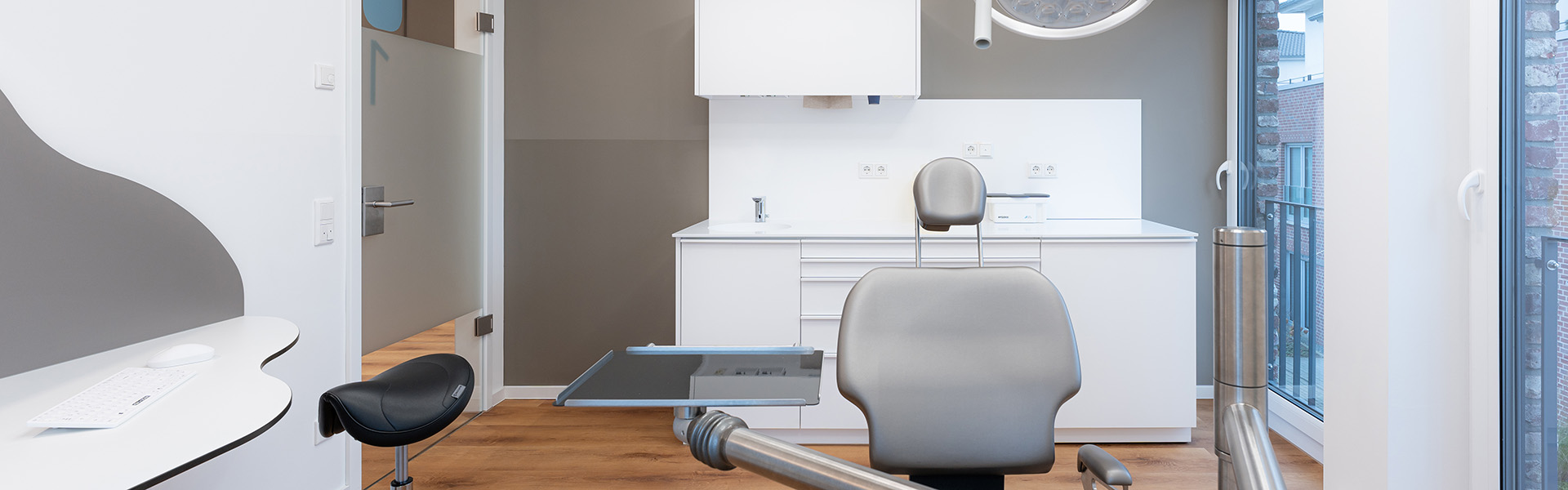
Sanitary equipment for doctor’s practices: a harmonious blend of architecture and hygiene.
In doctor’s practices – and dental practices in particular – drinking water has a key role to play, from hand hygiene to sterilisation processes and applications directly involving patients. Indeed, dental practices have very special requirements for sanitary facilities, with drinking water hygiene being affected by many tapping points, regular breaks in use and specific risks in treatment areas. The architecture, drinking water installation and later day-to-day operations must all be addressed as a coherent whole.
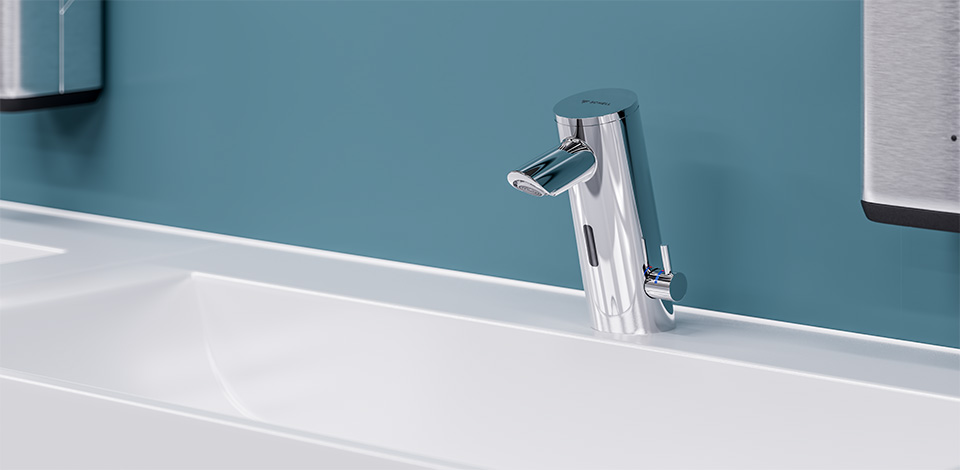
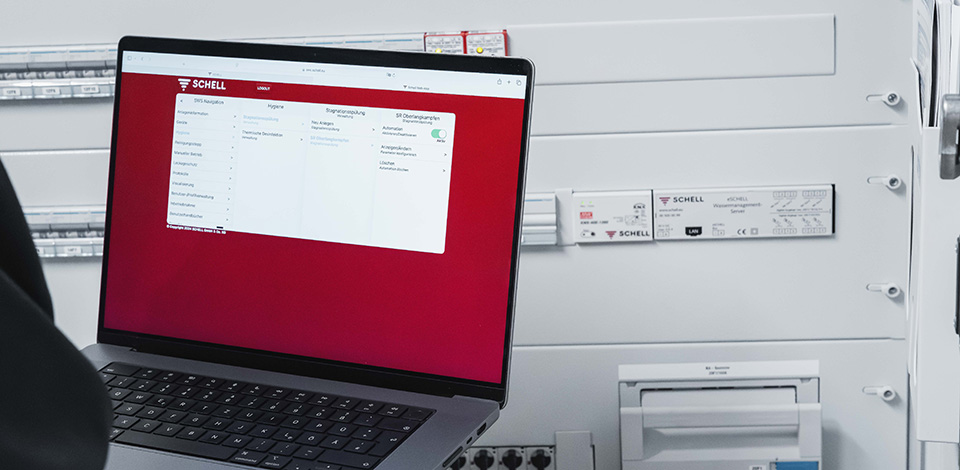
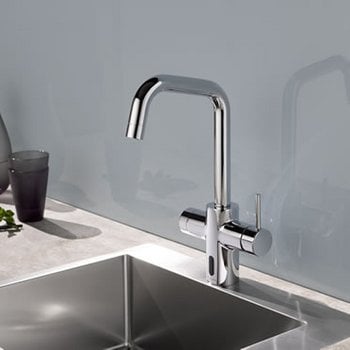
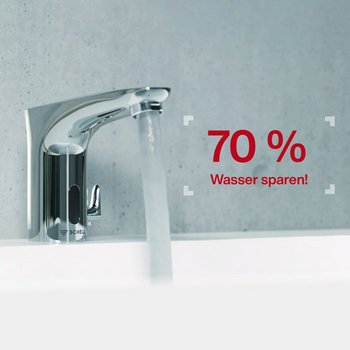
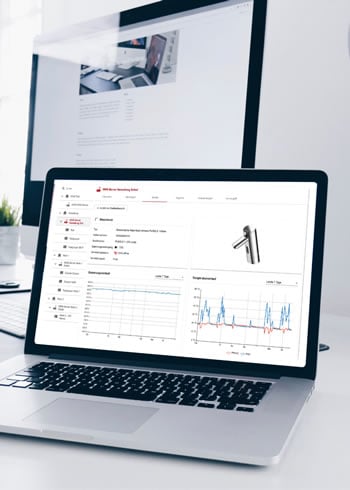
With durable electronic taps that can trigger automated stagnation flushes and the SWS/SMART.SWS Water Management System, SCHELL offers the right solutions to equip dental practices so they are safe, functional and ready for future challenges.
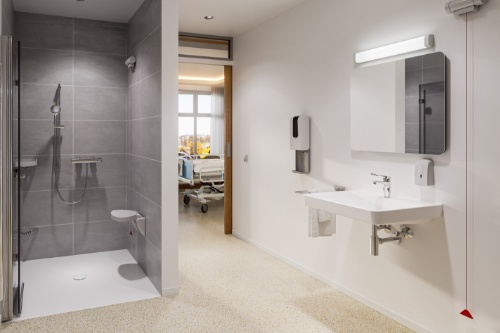
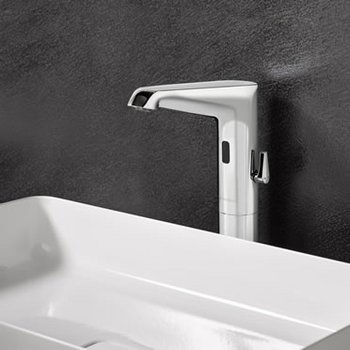
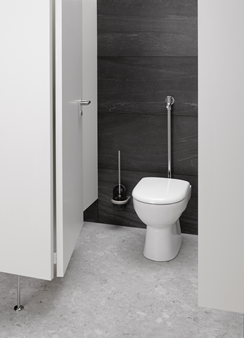
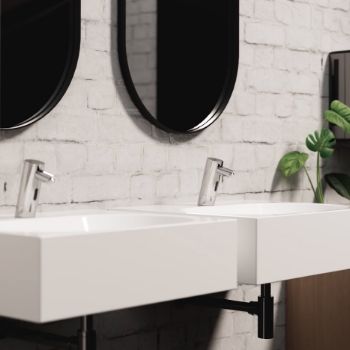
Patient WCs and staff areas: Taps in patient WCs and staff areas should be intuitive, comfortable and hygienically safe to use for everyone concerned. To prevent any risk of scalding, temperature limiters are a useful feature.
Renovation, practice takeover or new build? Factors to consider.
Planning the drinking water installation early on
The number of tapping points in dental practices is often underestimated. Yet these connections are present in almost every part of the practice – in every treatment, utility and staff room, as well as sterilisation stations, lab areas and ancillary spaces. Depending on practice size, this can add up to as many as 10–15 tapping points, plus numerous appliance connections.
This means that it is crucial to plan for the later use of all tapping points from the outset. Which tapping points are used on a daily basis? Where might longer interruptions in use occur? How can the regular exchange of water be assured, so as to guarantee good drinking water hygiene?
Ensuring the regular exchange of water
Keep the water flowing is a basic requirement for maintaining drinking water quality. In dental practices, long weekends, public holidays or company holidays can easily cause problematic stagnation in the piping, however. In addition, individual tapping points in labs or utility/ancillary rooms often see only irregular use on a daily basis.
If the same water stays in the piping for too long, however, this can favour the proliferation of bacteria like Legionella or Pseudomonas aeruginosa. To prevent this from happening, the regular exchange of water across all tapping points must be assured.
Hygienically safe handwashing stations
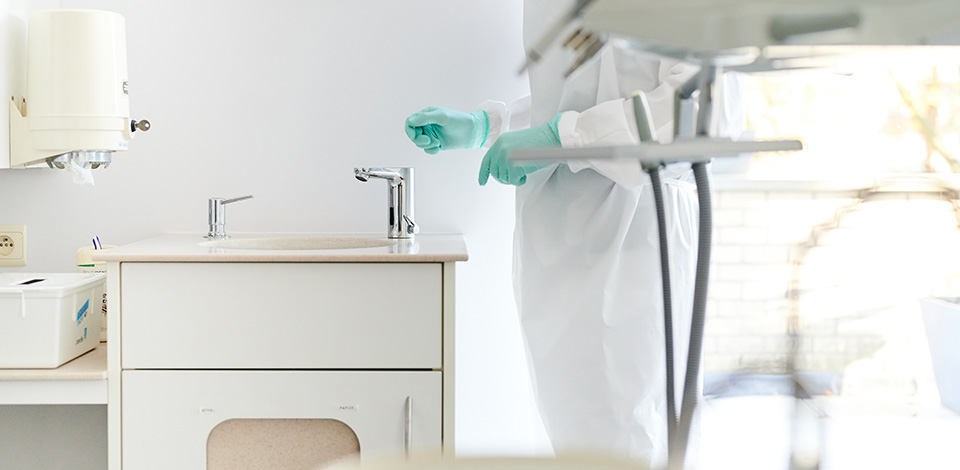
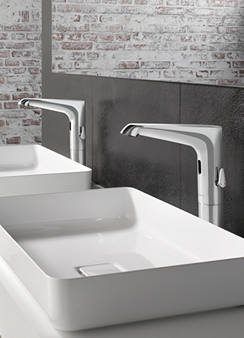
Handwashing stations in dental practices must help to preserve proper hygiene in dental care. Contactless operation is an important feature here: this avoids recontamination of the hands via handles or levers after handwashing is complete.
The design of handwashing stations also needs careful planning. The jet of water from the tap should not enter the open drain directly, as this could aerosolise Pseudomonas aeruginosa and other harmful bacteria lurking in the waste trap. Overflows are another critical area and can easily become problematic for hygiene. Cleaning and disinfection are also made easier if surfaces are contiguous and materials have fewer joins.
Planning breaks in use and operation of the drinking water installation outside practice hours
For insurance reasons, practices often switch off water and power supplies outside business hours. The trouble is, that automated stagnation flushes cannot take place if the systems are completely shut down. Accordingly, the power and water supplies to the installation must be planned so that any necessary hygiene activities can continue even during interruptions in use.
Getting architecture and hygiene to work together
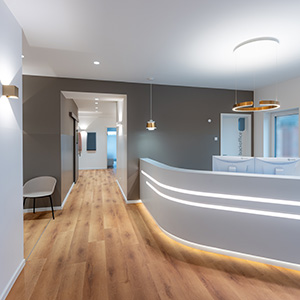
Modern dental practices need to be more than just functional: they also need to create a pleasant atmosphere. The reception area, waiting room and treatment spaces need to be designed to give patients a feeling of safety and well-being. Of course, proper attention should also be paid to the hygienic requirements.
Accordingly, it’s very important to plan the design and hygiene from the outset, to ensure hygiene risks can already be reduced at this stage. Drinking water hygiene in particular is a key precondition for keeping practice activities hygienically safe into the long term.
Materials and surfaces also have a key role to play here: these should be selected to ensure that they are easy to clean, help to promote good hygiene in everyday tasks and also blend seamlessly with the practice’s overall interior design choices.
What will become apparent is that hygiene and design are not mutually exclusive. Quite the opposite: a well thought-out architectural approach can actively support hygienically safe operation.



![[Translate to English:]](/fileadmin/user_upload/images/menu/menu_service_downloads_broschueren.jpg "[Translate to English:]")




![[Translate to English:]](/fileadmin/_processed_/7/7/csm_menu_unternehmen_ueber-schell_awards_f6cec25b1d.jpg "[Translate to English:]")
![[Translate to English:]](/fileadmin/_processed_/a/0/csm_menu_unternehmen_ueber-schell_wasser-sparen_41036d2dd9.jpg "[Translate to English:]")