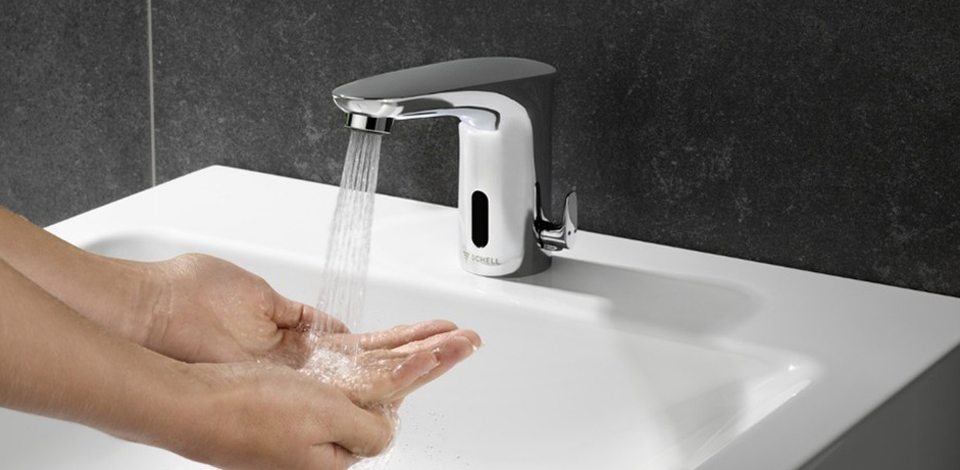
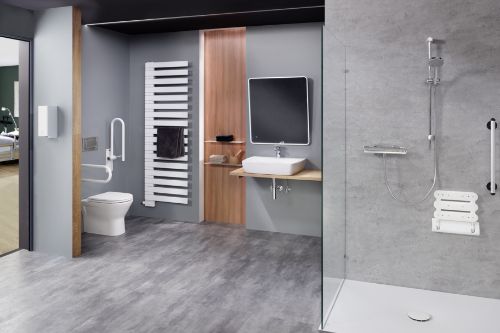
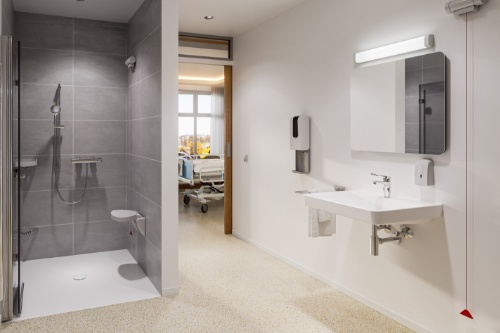
Sanitary facilities in hospitals demand especially highstandards of hygiene. These facilities offerplenty of points of contact for spreading pathogens– putting both patients and medical personnel at risk. Alongsidehygiene and safety,aspects such asfunctionality and ease of upkeepalso play a central role. Key requirements are presented below.
General requirements
User safety: Sanitary facilities in hospitals are used by people from all age groups and with a wide variety of physical conditions. The facilities must be safe to use by all these individuals. Effective protection against burns and scalding is therefore essential to avoid injuries. In addition, safe usage by people with reduced mobility must also be possible at all times.
User hygiene: High standards of hygiene are essential to minimise the risk of infection and ensure the safe use of these facilities.
Clean and easy to maintain: Sanitary facilities in hospitals must be especially hard-wearing, and able to withstand intensive cleaning and disinfection processes. Quick and thorough cleaning is also equally important.
Drinking water hygiene: Sanitary facilities in areas of hospitals open to visitors typically see a very high level of use. At the same time, some private patient rooms may remain unoccupied for longer periods of time. As water starts to stagnate in the piping here, this can promote the excessive growth of Legionella.
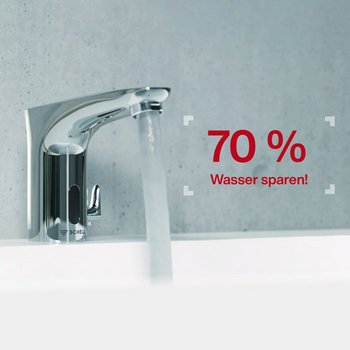
Operational sustainability and saving water: The economical use of water and energy is also an all-important topic for hospitals – which makes sustainable and water-saving solutions increasingly relevant.
Specific requirements
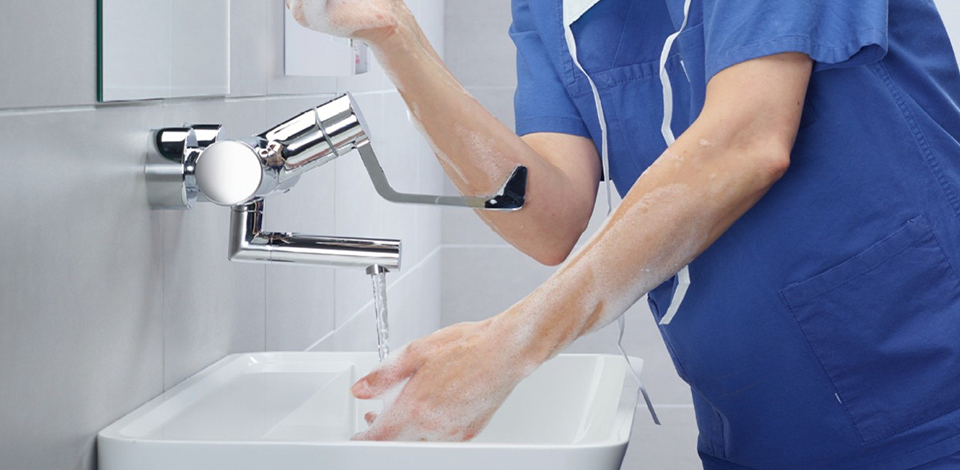
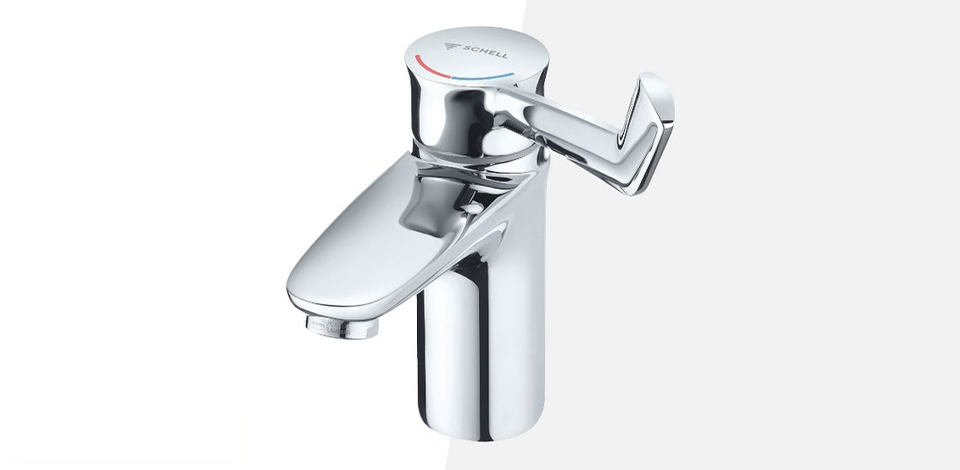
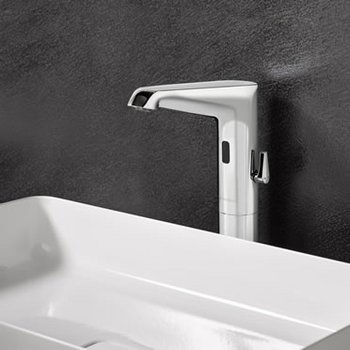
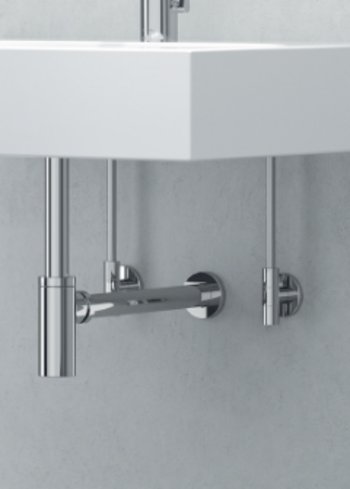
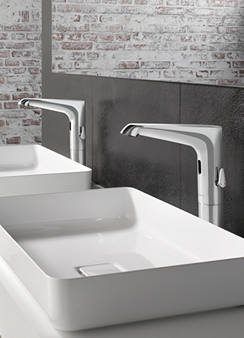
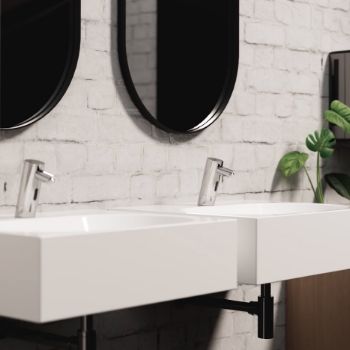
Wash basins: Wash basins in hospitals must be safe and intuitive to use for everyone. Temperature limitation is essential to avoid the risk of scald injuries. Materials must also meet strict requirements for hygiene, robustness and resource conservation.
Theatre and treatment areas: Hygiene requirements are especially strict in operating theatres and treatment rooms. Fittings and sanitary equipment here must all be completely sterile. Durable, low-maintenance solutions are also needed, to avoid equipment failure in the high-risk theatre area.
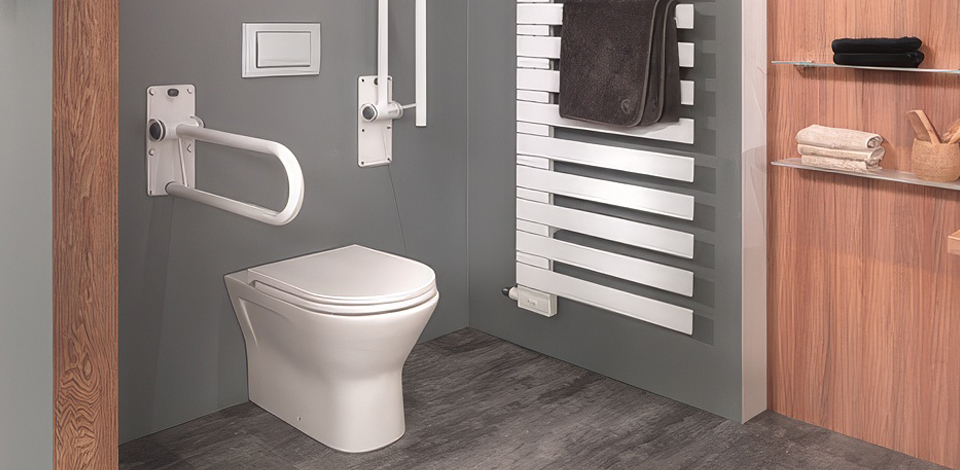
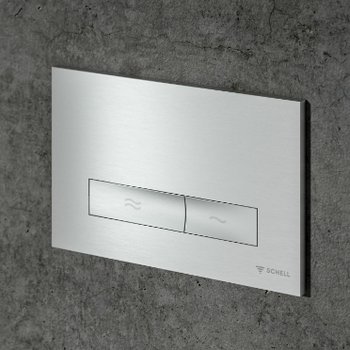
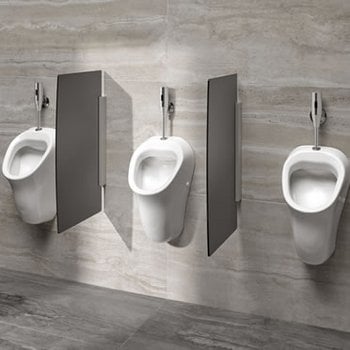
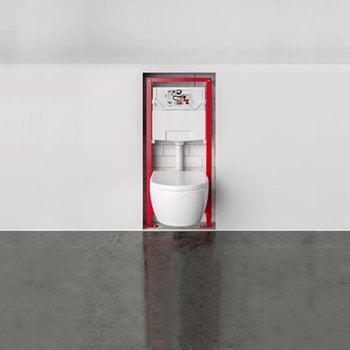
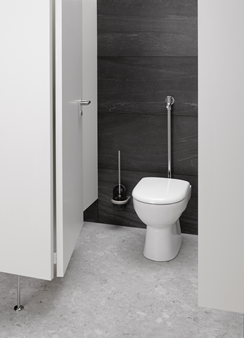
WC facilities: The WC facilities in hospitals are used by a great many people with a wide range of health conditions. Flush systems and fittings must therefore be robust, easy to clean and proof against vandalism.
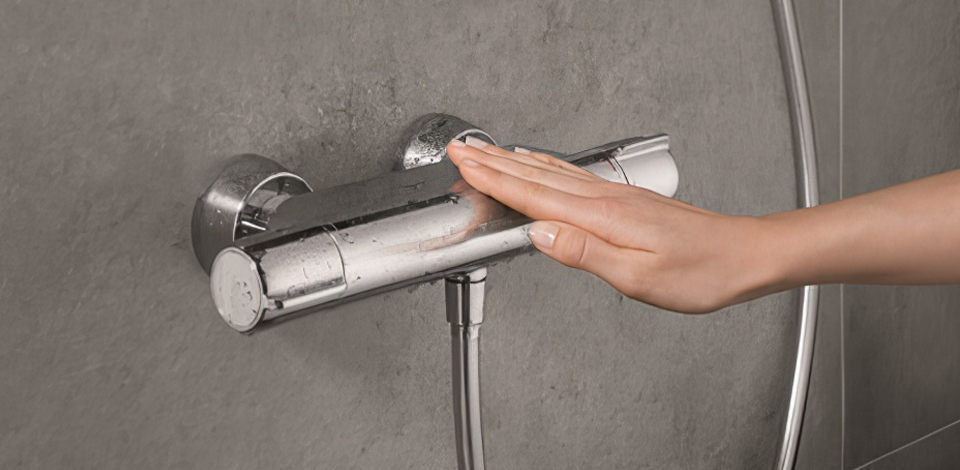
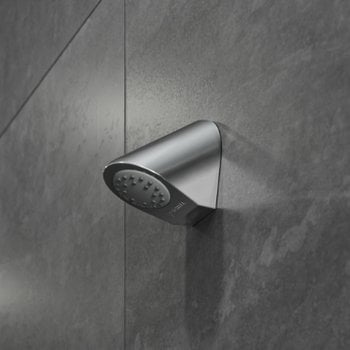
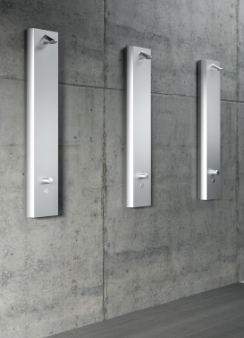
Showers: Showers must guarantee a high level of hygiene safety and reliably prevent any chance of a scald injury. Safe usage must also be ensured for people with reduced mobility. Requirements for efficiency, ease of upkeep and resource-friendly operation must also be satisfied.
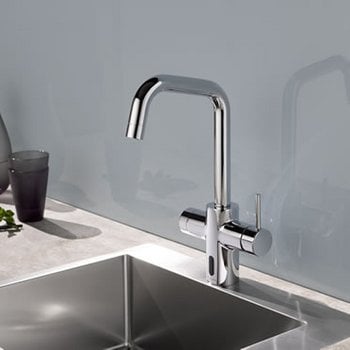
Kitchens: In hospital kitchens, ensuring the water supply is hygienic is a top priority: this is needed to avoid cross-contamination while also maintaining strict standards for food preparation. Robust materials and straightforward cleaning are also all-important here.
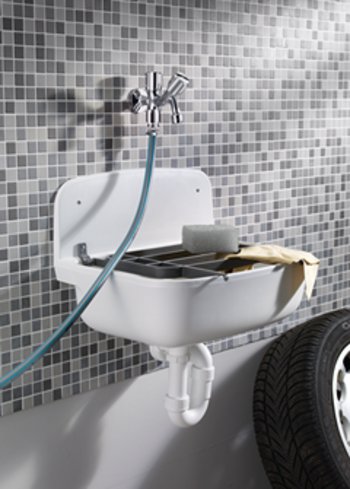
Technical/utility rooms: Technical/utility rooms are often infrequently used, although they still require reliable sanitary solutions. Compact, space-saving fittings that require no additional installation effort are needed here.

![[Translate to English:]](/fileadmin/_processed_/1/b/csm_symstemloesungen_e2_thumb_6bca267f26.jpg "[Translate to English:]")





![[Translate to English:]](/fileadmin/user_upload/images/menu/menu_service_downloads_broschueren.jpg "[Translate to English:]")




![[Translate to English:]](/fileadmin/_processed_/7/7/csm_menu_unternehmen_ueber-schell_awards_f6cec25b1d.jpg "[Translate to English:]")
![[Translate to English:]](/fileadmin/_processed_/a/0/csm_menu_unternehmen_ueber-schell_wasser-sparen_41036d2dd9.jpg "[Translate to English:]")