Drinking water hygiene – clean water is the basis for life
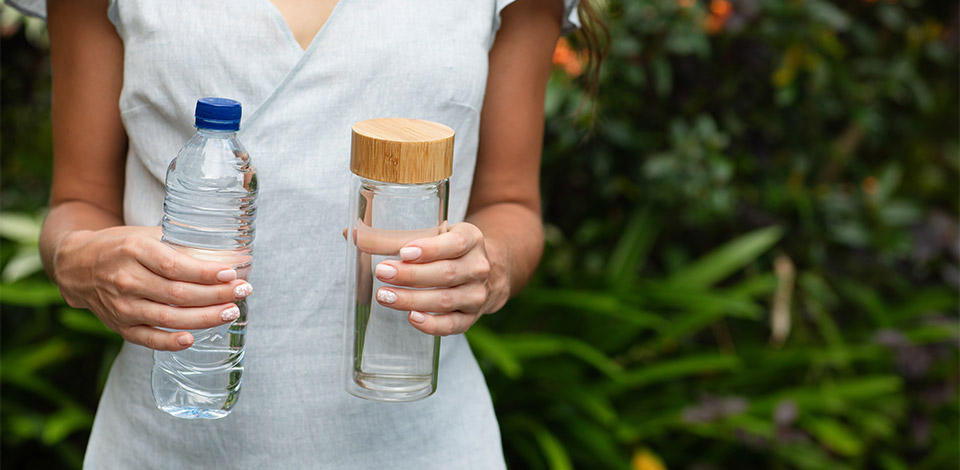
Drinking water quality in Germany is among the highest anywhere in the world. This quality is guaranteed by the local water utility. To ensure that every user also enjoys this high quality, the drinking water installation in the building must be working properly and water must be regularly used – and thus ‘restocked’ – at the tapping points. Building owners and managers must keep the drinking water in a sound technical condition while also making sure that the building users are aware of the importance of regular water exchanges. After all: pipes and fittings are the ‘packaging’ for this most important ‘foodstuff’ – our drinking water. And, like any other foodstuff, drinking water has a ‘shelf life’: it needs to be used regularly and therefore continuously ‘restocked’ in the installation. In much the same way as we buy new items of food to restock our fridges, for example.
Drinking water in Germany – first-class quality
Drinking water in Germany is our most tightly regulated foodstuff. Drinking water undergoes a wide range of microbiological and chemical testing to confirm compliance with the German Drinking Water Regulation (TrinkwV). Local water utilities must also ensure security of supply – even when faced with changing environmental conditions like rising temperatures or the impacts of climate change. And we should be very proud of their achievements. Yet from the service connectiononwards, every owner and user is themselves responsible for maintaining water quality. A few key rules need to be followed here.
Fresh drinking water: safe to drink, but for how long?
Water is a natural product and therefore has a natural shelf life. When it stops flowing and just ‘sits’ in the piping, a process of change begins. This stagnation, as it is called, affects freshness even after only a few hours, as materials can then start to leach into the water. Stagnation times of more than four hours are therefore already considered too long for drinking water that will be used to prepare food – especially for infants and pregnant women. This water can be used for washing up, watering plants or similar activities, however. If the drinking water stays unused for even longer, microorganisms can rise to unsafe levels after around 72 hours. This includes pathogens like Legionella, which is naturally found at low concentrations in water but can present a health risk if allowed to proliferate to excessive levels. Wherever air-water mixtures can form – not only the obvious example of showering but also during hand-washing – there is a significant risk of infection: Legionella preferentially propagates at temperatures between 30 °C and 45 °C, and can enter the lungs if present in water mist that is breathed in. This water is nonetheless still safe to drink.
Sharing responsibility – who ensures drinking water is safe?
Responsibility for drinking water hygiene is an endeavour shared among multiple stakeholders:
- Water utilities: guarantee quality up to the service connection
- Owners/landlords and building operators: bear responsibility from the water meter onwards for the drinking water installation and perform legal duties like Legionella testing
- Users and residents: support overall hygiene with regular usage and stagnation flushes
Summary – drinking water hygiene protects our most valuable foodstuff
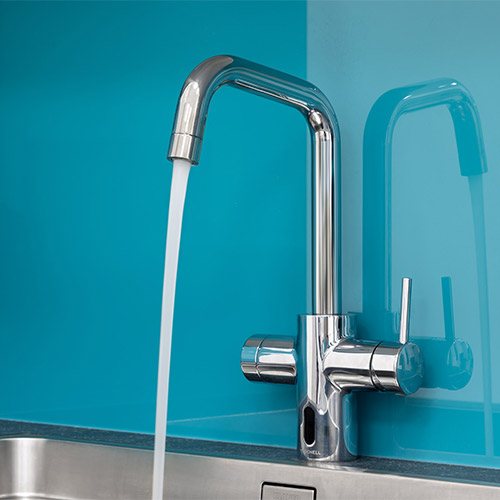
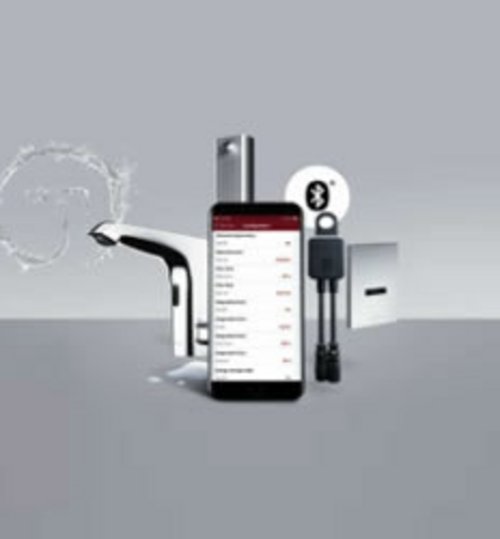
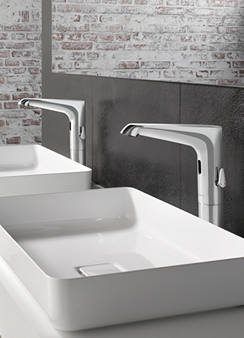
Clean drinking water should not be taken for granted. While the high quality achieved in Germany is the result of long-standing safeguards and tight regulation, drinking water hygiene in buildings depends on responsible handling, regular use and maintenance to professional standards. Electronic fittings can make an important contribution here by enabling automated flushes and so avoiding excessively long periods of stagnation. In this way, operators and users act together to safeguard water quality in buildings.Properly implemented, drinking water hygiene protects health, ensures quality of life and secures the sustainable use of water as a resource.

![[Translate to English:]](/fileadmin/_processed_/1/b/csm_symstemloesungen_e2_thumb_6bca267f26.jpg "[Translate to English:]")


![[Translate to English:]](/fileadmin/user_upload/images/menu/menu_service_downloads_broschueren.jpg "[Translate to English:]")



![[Translate to English:]](/fileadmin/_processed_/7/7/csm_menu_unternehmen_ueber-schell_awards_f6cec25b1d.jpg "[Translate to English:]")
![[Translate to English:]](/fileadmin/_processed_/a/0/csm_menu_unternehmen_ueber-schell_wasser-sparen_41036d2dd9.jpg "[Translate to English:]")